As utility-scale renewable energy projects expand across South Africa, the success of solar developments increasingly depends on the integration of complex civil, electrical, and structural engineering systems beneath the visible photovoltaic infrastructure
(Date) 2026: The Du Plessis Dam Solar PV2 project near De Aar in the Northern Cape demonstrates how multidisciplinary engineering enables renewable energy facilities to operate safely, efficiently, and sustainably at scale.
The project forms part of South Africa’s growing private renewable energy market. Developed by Mulilo and H1 Capital, with Etana Energy as the offtaker, it comprises a 75 MWac (105 MWdc) solar photovoltaic facility expected to generate approximately 248 GWh of clean electricity annually once fully operational.
Appointed as the Engineering, Procurement and Construction (EPC) contractor, Aurex Constructors is self-executing the project’s major civil, mechanical, and electrical disciplines, while specialist contractors undertake the high-voltage scope. The project reached financial close in March 2025, with construction commencing in May 2025 and commercial operation targeted for December 2026.
While solar developments are often visually associated with photovoltaic modules, the engineering complexity required to transform undeveloped land into functioning energy infrastructure extends far beyond the solar arrays themselves. The Du Plessis Dam Solar PV2 project highlights the critical role that integrated engineering systems play in enabling long-term plant performance.
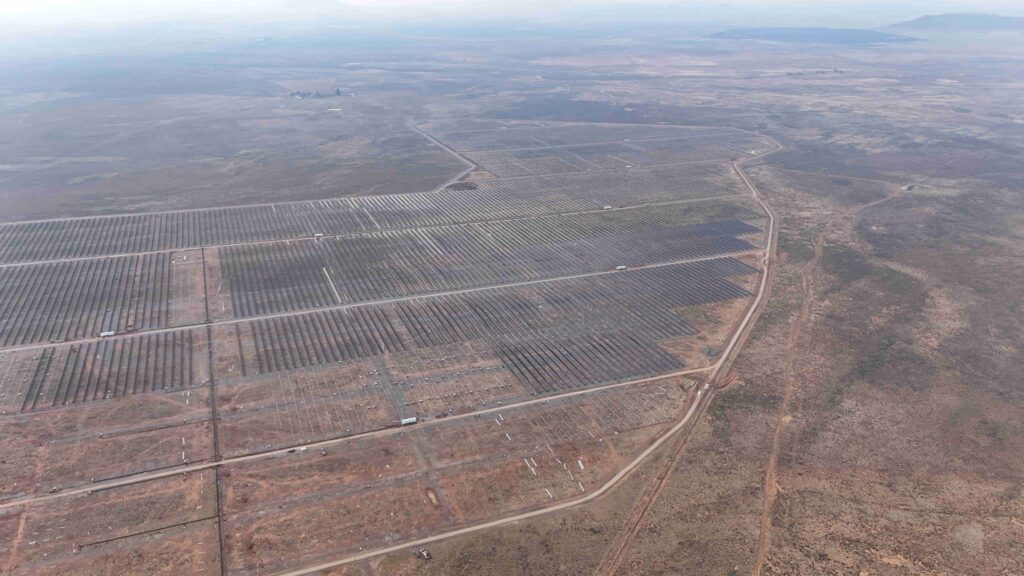
Designing infrastructure around the natural terrain
A central engineering philosophy throughout the project was to develop practical solutions that worked with the natural terrain rather than against it. The site presented several engineering challenges, including varying geology, hard rock conditions, changing slopes, drainage constraints, and environmental considerations that required continuous coordination between disciplines during both design and construction.
“The success of utility-scale solar projects depends heavily on the engineering systems beneath the modules,” says Herman Buhrmann, Renewable Energy Solutions Operations Director at Aurex Constructors. “Projects of this scale require integrated decision-making across civil, structural, electrical, and environmental disciplines to ensure the facility remains constructible, maintainable, and operationally efficient over its full design life.”
Rather than relying on extensive terrain modification, the engineering team prioritised optimised road alignments, stormwater management, and reduced earthworks to minimise environmental impact and unnecessary construction activity.
This approach allowed the project team to balance constructability, cost efficiency, operational performance, and environmental considerations simultaneously throughout the EPC delivery process.
The hidden civil engineering behind solar infrastructure
Although photovoltaic modules dominate the visual landscape of solar facilities, much of the project’s technical complexity lies within the civil engineering infrastructure supporting the plant. At Du Plessis Dam Solar PV2, the civil engineering scope extended far beyond conventional earthworks, forming the underlying infrastructure required to support the construction, operation, and long-term reliability of the facility.
The project included the development of extensive internal road networks designed to accommodate both heavy construction traffic during the build phase and ongoing operational access once the plant becomes fully operational.
Earthworks and terrain optimisation activities were carefully planned to work with the site’s natural topography, reducing unnecessary cut-and-fill activities while ensuring suitable platform stability and drainage performance across the development footprint. The civil scope also incorporated the design and construction of structural and equipment foundations supporting key electrical and mechanical infrastructure throughout the facility.
Significant attention was given to stormwater and drainage management, with integrated systems developed to control runoff, mitigate erosion, and reduce flood risks across the large and geotechnically variable site.
In parallel, geotechnical investigations and material assessments informed infrastructure design decisions, allowing engineering teams to optimise the use of in-situ materials while adapting designs to changing ground conditions.
Continuous coordination between civil, electrical, mechanical, environmental, and tracker system teams was required throughout the EPC process to ensure that all infrastructure interfaces remained constructible, compliant, and operationally integrated.
Doron Levin, Civil Engineer at Aurex Constructors, explains that large-scale solar developments require infrastructure capable of supporting both intensive construction activity and decades of operational reliability.
“Civil engineering systems are often overlooked in renewable energy projects because they are largely hidden once construction is complete,” says Levin. “However, these systems ultimately determine how effectively the facility can operate and be maintained over time.”
The project required the construction of about 18.5 km of roads, 20.5 km of stormwater infrastructure, 38 km of trenching, and 8 km of fencing across a developed area spanning approximately 210 ha. The engineering team also focused on optimising the use of in-situ materials to reduce imported material volumes and minimise unnecessary hauling activities.
Managing stormwater and geotechnical complexity
Stormwater management formed a major component of the overall engineering strategy. The site’s varying slopes and natural drainage patterns required careful analysis to mitigate erosion, flooding, runoff concentration, and ponding risks across the facility.
Engineering teams developed integrated drainage solutions that coordinated with road layouts, trenching corridors, and equipment locations to ensure long-term site stability. “The challenge is not simply moving water away from infrastructure,” explains Levin.
“The engineering approach must consider how stormwater behaves across the entire site under different operating and weather conditions, while still maintaining constructability and environmental compliance,” highlights Levin. Geotechnical variability across the site also influenced infrastructure design decisions.
Engineering teams undertook material assessments and investigations to determine suitable foundation solutions, road designs, and earthworks strategies appropriate to changing ground conditions. This site-responsive approach reduced downstream construction risks while improving long-term infrastructure performance.
Electrical integration across the facility
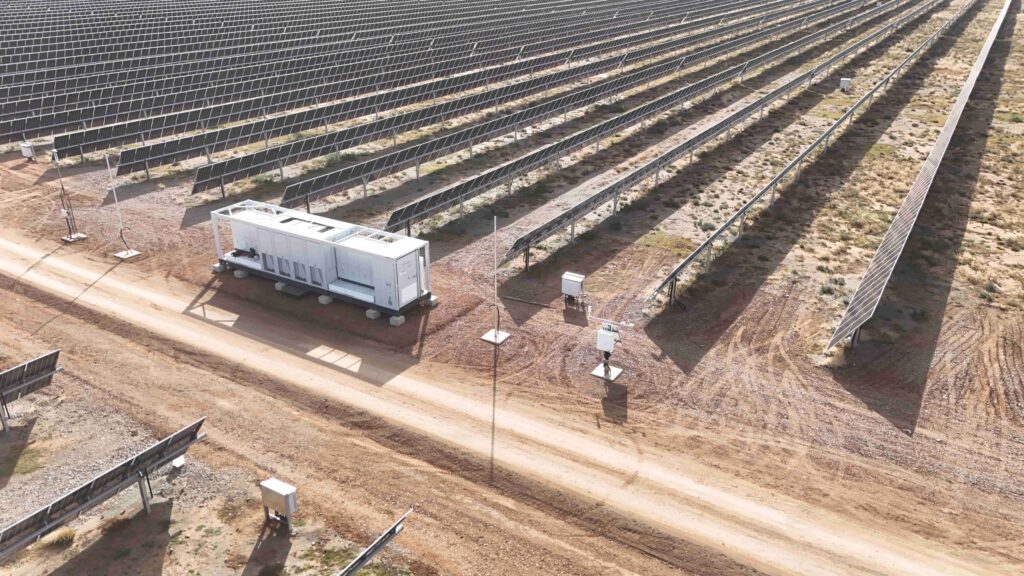
Beyond the visible solar modules, the project required extensive electrical infrastructure integration across the site. Much of this infrastructure is embedded directly within the civil works, creating a highly coordinated multidisciplinary environment during construction.
Key electrical integration considerations included underground cable routing, earthing and grounding systems, SCADA and communication infrastructure, trenching coordination, and interface management between civil, mechanical, electrical, and tracker systems.
Johann van Ellewee, Senior Electrical Engineer at Aurex Constructors, says the coordination between engineering disciplines is critical on projects of this scale. “Electrical infrastructure on utility-scale solar projects cannot be designed in isolation,” says van Ellewee.
“Cable routing, trenching, drainage, structural supports, and equipment positioning all need to integrate seamlessly to avoid construction conflicts and ensure long-term operational reliability,” he says.
According to project progress updates, cable trench excavations have been completed, cable installation is nearing completion, and electrical cable terminations are well underway. The facility also includes approximately 55 000 m of installed DC string cable, 170 000 m of installed DC power cables, and 25 000 m of installed medium-voltage power cables.
Delivering renewable energy infrastructure at scale
The overall scale of the Du Plessis Dam Solar PV2 project reflects the increasing complexity of modern renewable energy infrastructure developments in South Africa. To date, more than 110 000 photovoltaic modules have already been installed on site. The completed facility will comprise approximately 170 000 modules across the 210-ha development footprint.
According to Mike Grobler, Du Plessis Dam Project Manager for Aurex, maintaining programme alignment within a large EPC environment requires constant multidisciplinary coordination. “Large renewable energy projects involve continuously evolving interfaces between engineering, procurement, construction, survey, and environmental teams,” says Grobler.
“Strong communication and rapid problem-solving are essential to maintaining programme momentum while ensuring engineering quality and safety standards are upheld.” One of the key engineering successes has been the strong collaboration between customers, contractors, consultants, and multidisciplinary teams throughout the project lifecycle.
The project has also supported local economic development through the creation of approximately 500 employment opportunities for local residents, alongside procurement and subcontracting opportunities for local SMMEs.
Engineering the future of renewable energy
As South Africa’s renewable energy sector continues to expand, projects such as Du Plessis Dam Solar PV2 demonstrate that successful solar developments rely on far more than photovoltaic technology alone.
The project illustrates how integrated engineering systems, including roads, drainage, foundations, electrical infrastructure, and geotechnical solutions, collectively enable renewable energy facilities to operate safely and efficiently over the long term. Future renewable energy developments will increasingly depend on integrated, site-responsive engineering approaches that balance performance, sustainability, and constructability.
For Aurex Constructors, the Du Plessis Dam Solar PV2 Facility represents not only a major renewable energy project, but also a demonstration of how multidisciplinary engineering expertise can support South Africa’s evolving energy landscape through practical, technically integrated infrastructure delivery.